Updated November 2026
Short answer: yes, if you choose a durable stone and a protective setting. Birthstones add a personal, colorful touch to a wedding band. Diamond, ruby and sapphire are hard enough for everyday wear; softer stones like opal, pearl and turquoise need more care. A bezel or channel setting protects the stone best.

When planning your wedding, you may be looking for ways to make your wedding band special. One popular idea is to include your birthstone. Birthstones hold sentimental value and add a personal touch that makes your ring one of a kind.
Birthstone wedding bands have become popular with both modern and traditional couples. You could add just your birthstone, both yours and your partner's, or even the birthstones of your blended family. This creates a powerful symbol of unity and love, reflecting the connection between you and your spouse.
Still, it's worth weighing the pros and cons. Birthstones add a personal touch and colorful flair, but you also need to think about durability, your preferred metal and the overall look. The choice is yours, and knowing what works best will make the decision easier.
Birthstones by month: which are best for a wedding band?
| Month |
Stone |
Mohs |
Daily wear |
| Jan |
Garnet |
6.5–7.5 |
Good |
| Feb |
Amethyst |
7 |
Good |
| Mar |
Aquamarine |
7.5–8 |
Good |
| Apr |
Diamond |
10 |
Great |
| May |
Emerald |
7.5–8 |
Care |
| Jun |
Pearl |
2.5–4.5 |
Care |
| Jul |
Ruby |
9 |
Great |
| Aug |
Peridot |
6.5–7 |
Care |
| Sep |
Sapphire |
9 |
Great |
| Oct |
Opal |
5.5–6.5 |
Care |
| Nov |
Topaz |
8 |
Good |
| Dec |
Turquoise |
5–6 |
Care |
Mohs scratch hardness, 1 to 10. Emerald is fairly hard but often has inclusions that make it more prone to chipping.
Significance of birthstones in wedding bands
Adding these colorful gems makes your ring more eye-catching and expresses the unique bond between you and your partner. Including both of your birthstones can represent the merging of your lives and strengthen your commitment to each other.
Although it isn't a traditional practice, a birthstone lets you break away from a conventional gold or platinum band. It allows you to create a personalized design that holds sentimental value beyond the material itself. Just remember practicality too: some gemstones are more durable and better suited to everyday wear.
Setting the birthstone in your wedding band
The most important choice is the setting, meaning how the stone is held in place on the band. Choose a setting that complements your ring's design and holds the birthstone securely.
Prong
Small metal prongs grip the stone. More light passes through, so it looks vibrant, but the stone is the most exposed.
Protection: lower
Channel
Stones sit in a row inside a metal channel. A sleek, modern look with extra protection.
Protection: high
Bezel
A band of metal circles the whole stone. A clean look and excellent protection against chips.
Protection: highest
Prong settings usually use three to six prongs or more, depending on the size and shape of the stone. Whatever setting you choose, consult a skilled jeweler. They can recommend the best style for your birthstone based on its hardness, shape and size.
Important considerations when including birthstones
It's essential to find the right balance between personalization and practicality.
Lifestyle: your daily activities and job play a big role. If you're active or work with your hands, choose a durable birthstone and a setting that protects it.
Budget: the cost of adding a birthstone varies widely with the type of stone and the design. Set your budget first, and explore options that add personalization without breaking the bank.
Ring size: a ring with a gemstone can be harder to resize than a plain band, so double-check your measurements. See our Ring Sizing guide.
Allergies: some people are sensitive to specific metals. If that's you, make sure both the setting and the band are made from hypoallergenic materials such as platinum or high-quality gold.
Durability: birthstones range in hardness, and some scratch or chip more easily. Diamonds, sapphires and rubies are highly durable choices, while softer stones like opals and pearls need extra care.
Protection: the way the stone is set greatly affects how long it lasts. Bezel and channel settings grip the stone securely and help protect it from chips and scratches.

Wedding bands with birthstone colors
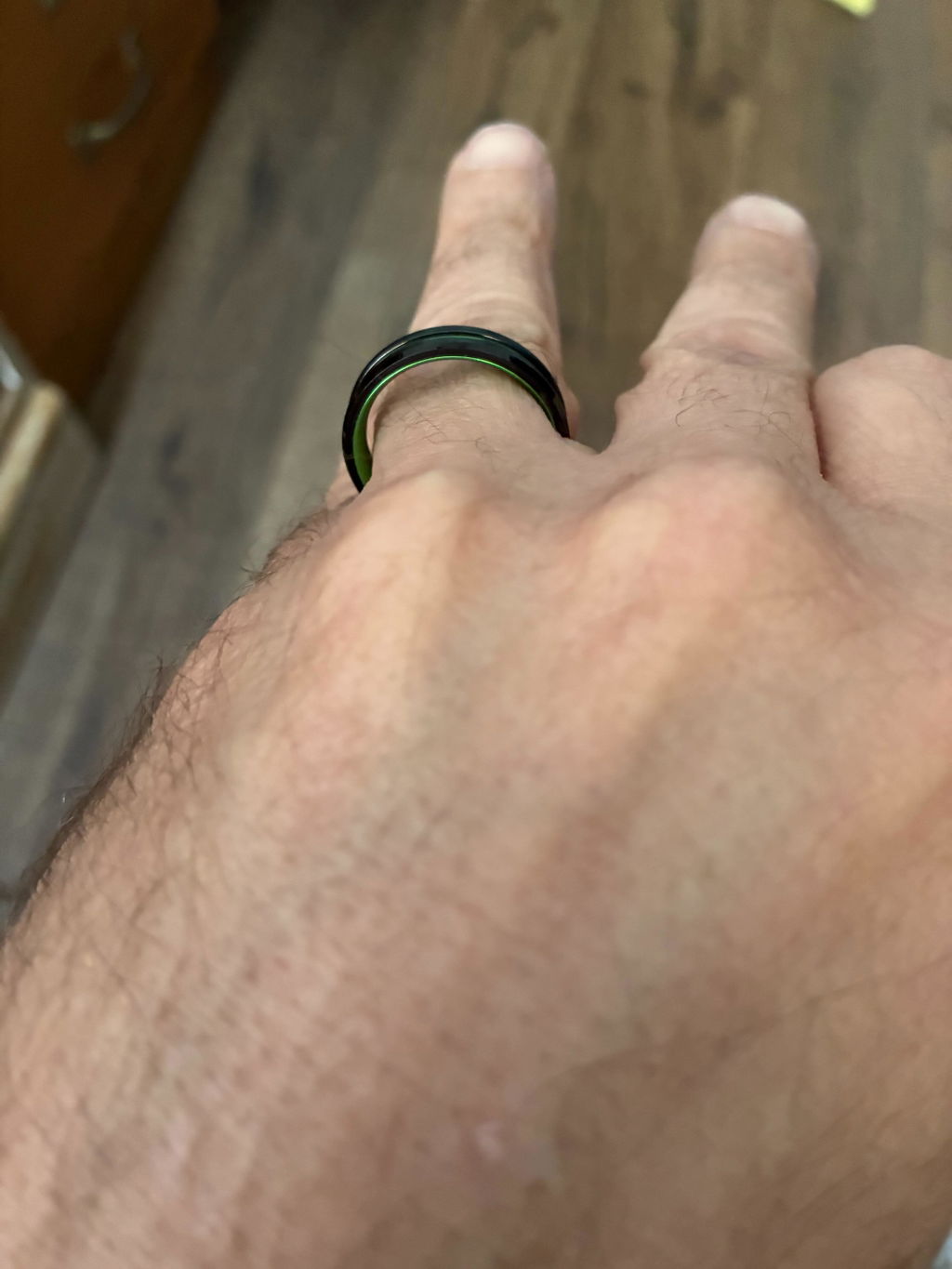
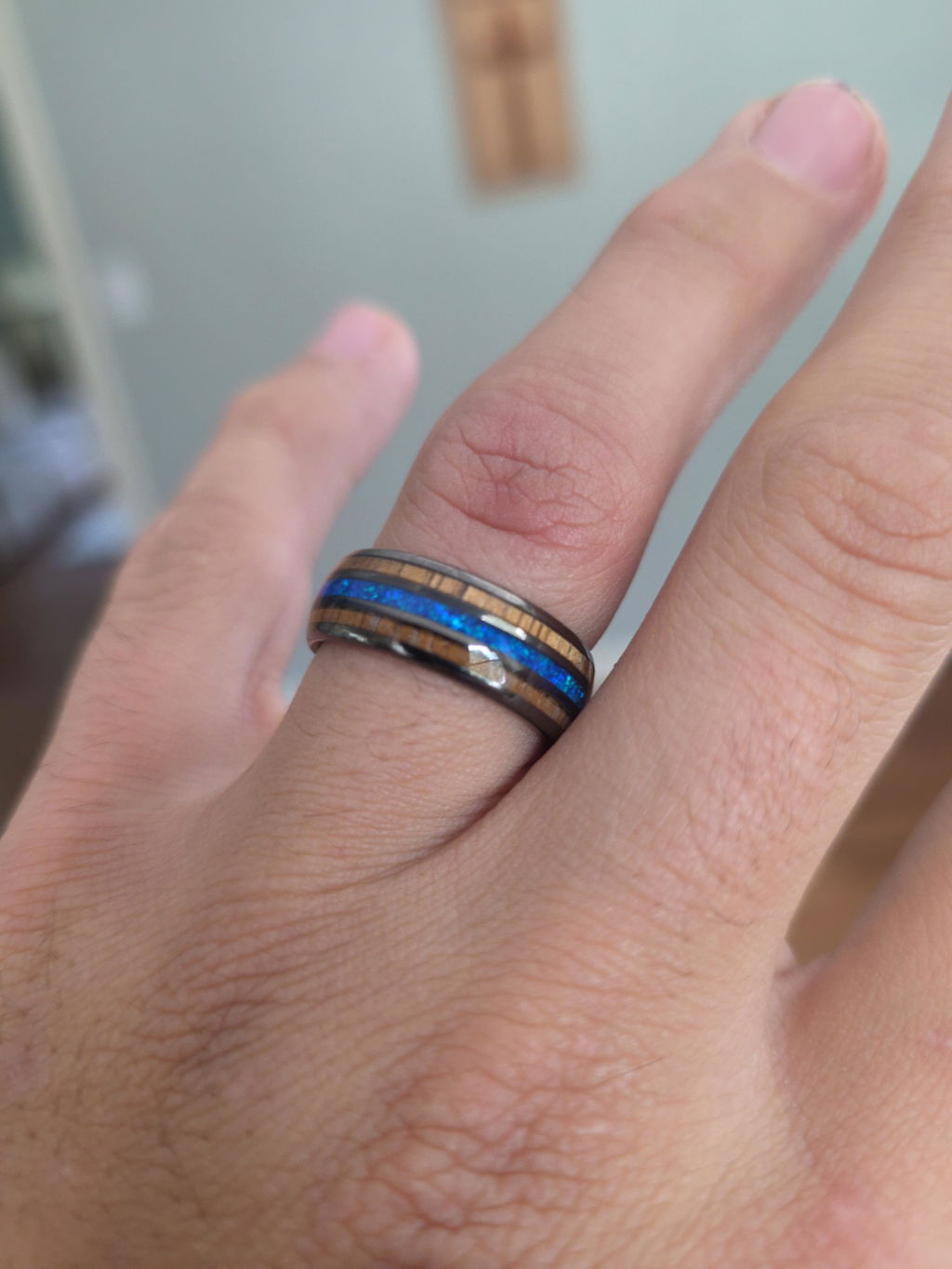
Our bands with stone settings and opal inlays make it easy to add your birthstone color to a durable tungsten or ceramic ring.
Frequently asked questions
What are the common designs for birthstone wedding bands?
Some couples choose a simple band with their birthstones set side by side. Others prefer alternating gemstones or a more detailed design. For a modern twist, try a single birthstone in a bezel setting or mix different metal tones. Your band should reflect your personal style.
Which birthstones are best for a wedding band?
The hardest ones: diamond (April), ruby (July) and sapphire (September). Topaz, aquamarine, garnet and amethyst also work well with a protective setting. Opal, pearl, turquoise and peridot need more care.
Can birthstones in wedding bands add sentimental value?
Absolutely. Your birthstones make the band more personal and meaningful, celebrating what's unique about your relationship and the unity of your bond.
What are the pros and cons of birthstones in a wedding band?
Pros: a unique, personal touch; special meaning for you and your spouse; and eye-catching color. Cons: some stones are softer than traditional materials like diamond and can be damaged over time; they can add cost; and your stone may limit the designs available.
Are there traditions behind birthstones in wedding bands?
There's no specific wedding tradition, but wearing birthstones dates back centuries. Many cultures believed they had mystical properties or brought good luck. A birthstone band honors those old beliefs while creating a modern symbol of your love.
Is wearing your partner's birthstone romantic?
Definitely. Wearing your partner's birthstone is a thoughtful, romantic gesture that symbolizes your connection. When you each wear the other's stone, you carry a piece of one another wherever you go.
Shop Wedding Bands