Updated November 2026
Short answer: an inlay is a strip of another material set into the outside of a ring. Wood is by far the most popular, followed by carbon fiber and opal. Carbon fiber and stone inlays set in resin are the easiest to live with; natural wood, antler and shell look the most organic but need a little more care, mainly keeping them out of long soaks.
The most popular inlays
Here's how many inlay designs we carry by material. Wood leads by a wide margin, and many rings combine two materials, such as koa wood with opal, abalone or antler.
Wood (koa, rosewood, walnut and more)
Active designs in our catalog by inlay, November 2026. Some rings combine two inlays.
Inlays at a glance
Wood
Warm, natural grain; every ring is different
Everyday toughness
Keep it dry; wipe clean
Carbon fiber
Woven black or gray pattern, modern look
Everyday toughness
Water is fine; very low care
Opal
Bright color and sparkle set in resin
Everyday toughness
Avoid hard knocks and harsh cleaners
Turquoise
Blue-green stone pieces set in resin
Everyday toughness
Avoid hard knocks and harsh cleaners
Meteorite pattern
Silver crosshatch look of iron meteorites
Everyday toughness
Depends on the material; see below
Deer antler
Creamy natural bone texture
Everyday toughness
Keep it dry; avoid oils and lotions
Abalone shell
Blue-green shimmer that shifts in light
Everyday toughness
Keep it dry; avoid knocks
Camo
Printed camouflage pattern under a clear layer
Everyday toughness
Avoid scratches and harsh cleaners
Toughness is our general guide for daily wear, from 1 (needs the most care) to 5 (very low care). It isn't a lab test.
Wood inlays
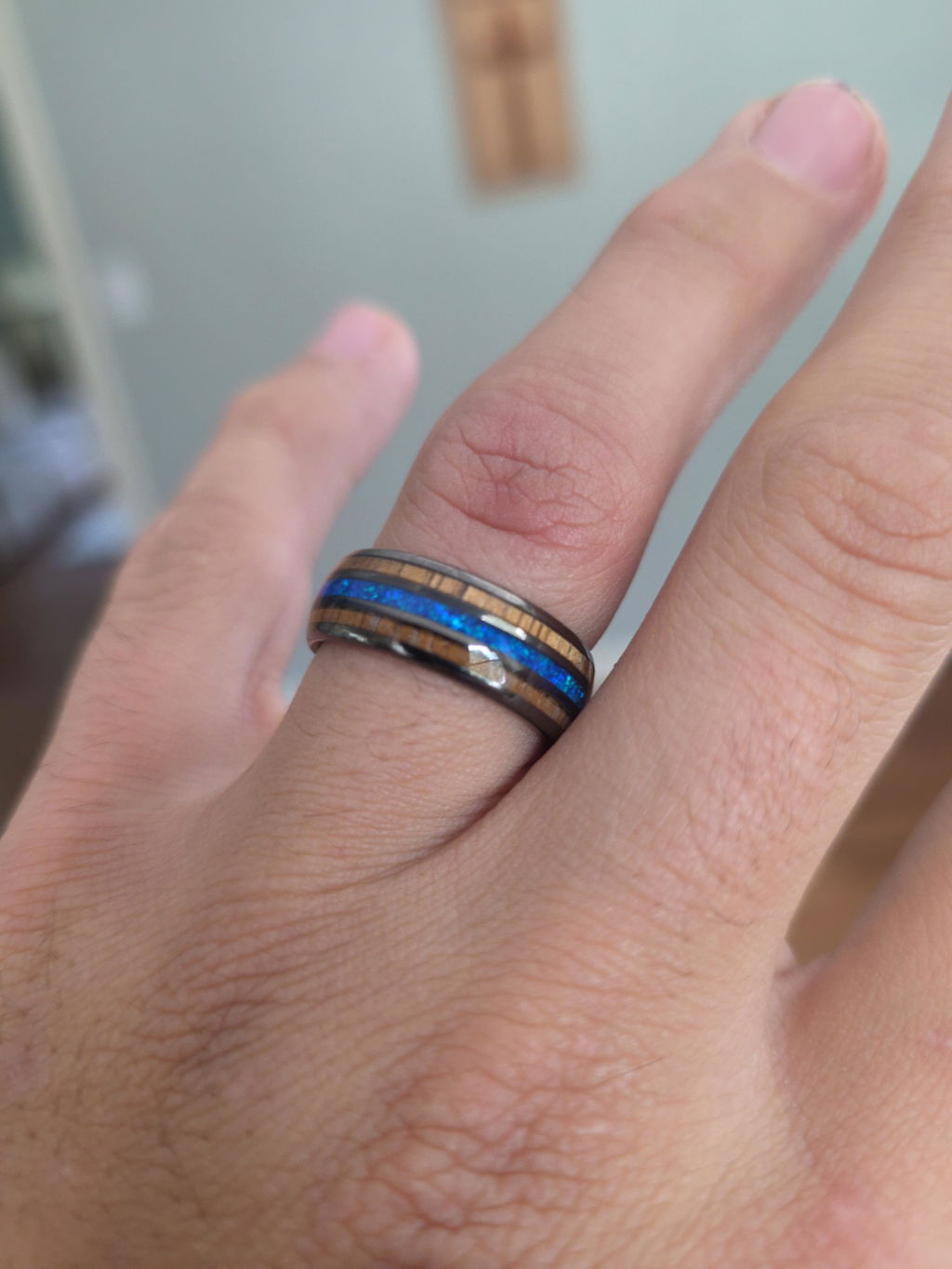
Wood brings warmth and a natural grain that makes every ring a little different. Our most popular is Hawaiian koa, a reddish wood that grows only in the Hawaiian Islands and is also used for ukuleles and guitars (Wikipedia). We also offer rosewood, black walnut, mahogany, padauk, zebrawood and more in our Wood Inlay Rings.
The wood is sealed with a protective clear coating, so everyday splashes are fine. Long soaks are what harm it: take the ring off for swimming, dishes and hot tubs. Over time, wood can darken slightly, which is part of its character.
Whiskey barrel wood comes from oak barrels used to age whiskey, and it's usually set as a sleeve on the inside of the ring. See our Wood Sleeve Rings.
Carbon fiber
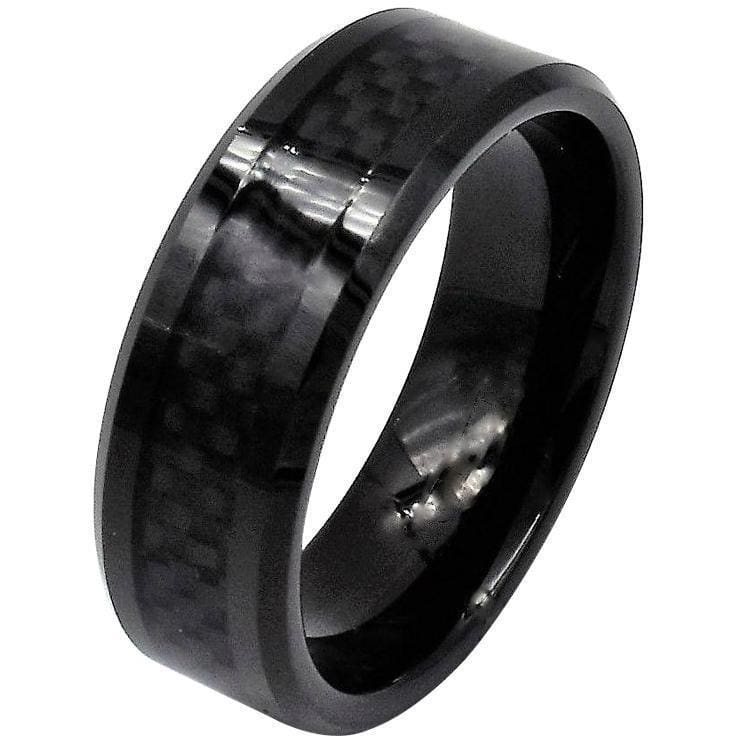
Carbon fiber is made of thin carbon filaments woven together and set in resin, the same type of material used in race cars and bicycles. It gives a ring a sharp, modern pattern, it's very light and it doesn't mind water. Of all inlays, it needs the least care. Shop Carbon Fiber Inlay Rings.
Opal and turquoise
Opal and turquoise inlays use small pieces of stone set in clear resin, which creates a bright, mosaic-like color that catches the light. The resin protects the stone, but a hard knock against a sharp edge can chip it, and harsh cleaners can dull the surface. Shop Opal Inlay Rings.
Meteorite
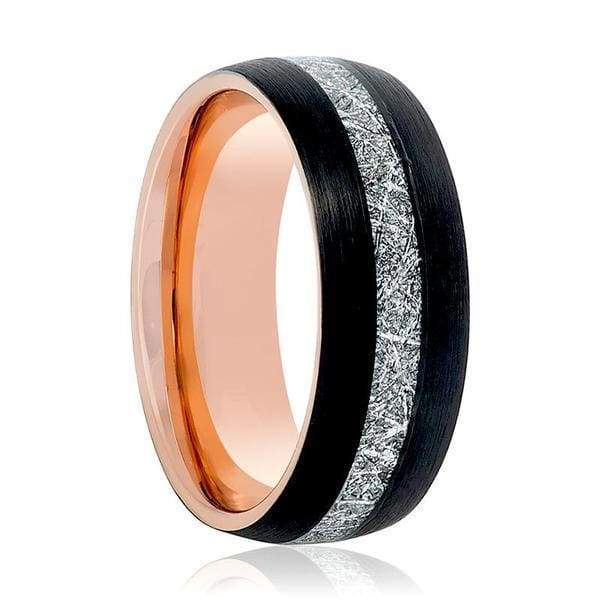
Iron meteorites such as Gibeon, found in Namibia, are mostly iron with about 8% nickel and show a crosshatch crystal structure called the Widmanstätten pattern, which jewelry designers prize (Wikipedia). Because genuine meteorite is mostly iron, it needs to stay dry and can rust if it's neglected. Our meteorite rings use a meteorite-pattern inlay that recreates the look without the iron, so they don't need that extra care.
Deer antler
Antler is bone. Deer shed their antlers and grow new ones every year (Wikipedia). Antler has a creamy, natural texture and pairs well with wood. Keep it dry, and wipe off lotions and oils, which can stain it. Shop Deer Antler Rings.
Abalone and other shell
Abalone and mother of pearl have a blue-green shimmer that changes as you move your hand. Shell is beautiful but softer than stone, so avoid knocks and long soaks. It's often paired with koa wood for contrast.
Camo and other patterns
Camo inlays are a printed camouflage pattern under a clear protective layer. They're tough in daily wear; avoid abrasive cleaners, which can scratch the clear layer. Shop Camo Rings.
Caring for any inlay ring
-
Clean gently. Wipe the inlay with a soft, slightly damp cloth and dry it right away. The metal can be washed with mild soap.
-
Avoid long soaks. Take the ring off before swimming, dishes and hot tubs, especially with wood, antler and shell.
-
Skip harsh chemicals. Bleach, solvents and abrasive cleaners can dull or damage an inlay.
-
Protect it from knocks. Take it off for the gym and heavy work.
The metal around the inlay matters too: tungsten keeps its shine, while titanium is lighter but shows fine scratches. See Titanium Ring Care and Do Tungsten Rings Rust, Tarnish or Fade?
Shop Wood Inlay RingsShop Carbon FiberShop Opal Inlay
Frequently asked questions
Are wood inlay rings waterproof?
The wood is sealed, so splashes and hand washing are fine. Long soaks are not: take the ring off before swimming, washing dishes or using a hot tub, and dry it if it gets wet.
Which inlay is the most durable?
Carbon fiber needs the least care, followed by stone pieces set in resin such as opal and turquoise. Natural materials like wood, antler and shell need the most care.
Can I engrave a ring that has an inlay?
Yes, on the inside, and text and symbols are free. Rings with an outside inlay can't be engraved on the outside, and rings with a wood or mokume sleeve inside can't be engraved inside. See our engraving page.
Do meteorite inlays rust?
Genuine iron meteorite can rust if it stays wet. Our meteorite rings use a meteorite-pattern inlay, so they don't.
What's the difference between an inlay and a sleeve?
An inlay sits in a channel on the outside of the ring, where you see it. A sleeve lines the inside of the ring, so the material touches your finger, like our whiskey barrel wood sleeve rings.
Does the warranty cover the inlay?
Our Lifetime Warranty covers the ring itself; wear and damage to an inlay count as normal wear. Following the care tips above keeps an inlay looking good for years.
Sources: Wikipedia, Acacia koa, Gibeon (meteorite) and Antler. Catalog counts: The Artisan Rings, November 2026.