Updated November 2026
Short answer: No, wedding bands don't have to match. Matching bands were the tradition, but today many couples choose rings that reflect each person's style. You can go fully matching, coordinate on one shared detail, or pick completely different rings. What matters is that you both love wearing them.

Wedding bands are a symbol of love and commitment, and choosing them is an important decision. Traditionally, matching bands were the norm, reflecting a united front between bride and groom. Times have changed, and couples now have more options than ever.
There are no hard and fast rules saying wedding bands have to match, and the trend is slowly becoming a thing of the past as couples showcase their individuality. Consider your personal styles, the metals you prefer and the overall look for both of you. You'll wear your ring every day, so the key is to balance expressing your personalities with honoring your union.
Three ways to pair your wedding bands
Fully matching
Same metal and design, often sold as a set in his and hers widths.
Coordinated
Different rings that share one detail: the metal, an inlay, a finish or an engraving.
Different
Each of you picks the ring you love, in any metal or style.
History of wedding bands
Prehistoric
Grass and reed rings
Simple adornments symbolized a couple's commitment
Renaissance
Interlocking designs
Bands that fit together like puzzle pieces led to matching rings
World War II
Men's wedding bands
Couples exchanged rings as reminders of love during uncertain times
Today
Every style and material
Matching, coordinated or completely different
Wedding bands have a rich history across cultures. In prehistoric times, simple ring-like adornments made from grass and reeds symbolized a couple's commitment. Over time, these evolved into more elaborate and durable designs.
During the Renaissance, wedding bands took on a more romantic and artistic look. They were often designed to fit together like puzzle pieces, symbolizing the interlocking nature of a couple's love. This tradition led to matching wedding bands, with both bride and groom wearing similar rings.
World War II had a significant impact too. With men going off to war, many couples exchanged rings as a lasting reminder of their love. This popularized men's wedding bands, which had not been commonplace in the United States before the 20th century.
Today, couples around the world choose from countless styles and materials. While traditions have shifted over the centuries, the wedding band remains a constant symbol of love, commitment and unity.
The symbolism behind matching bands
Matching bands go beyond looks. They visually represent the unity between you and your partner: rings of the same material and design reflect the harmony in your relationship and your decision to spend your lives together.
There's another layer, too. If your bands are designed to complement each other, that compatibility may extend into your everyday life together. Matching rings tell the world that you're a perfect fit.
You can still keep your individuality. The base material may match, but you can customize details like engraving or gemstones to make each band your own. In the end, what matters is that your rings symbolize the love and unity you share, whether they match or not.

Pros and cons of matching wedding bands
Pros
Symbolism: a visual reminder of your vows and shared life ahead.
Tradition: keeps a custom alive if matching rings are the norm in your family.
Simplicity: fewer choices to make when the options feel overwhelming.
Cons
Personal taste: if one prefers gold and the other silver, someone may not love their ring.
Individuality: some people want to express their own style.
Budget: some matching designs may cost more than you want to spend.
Non-matching wedding band ideas
Non-matching bands let you each express your own style. Here are some options:
Different metals
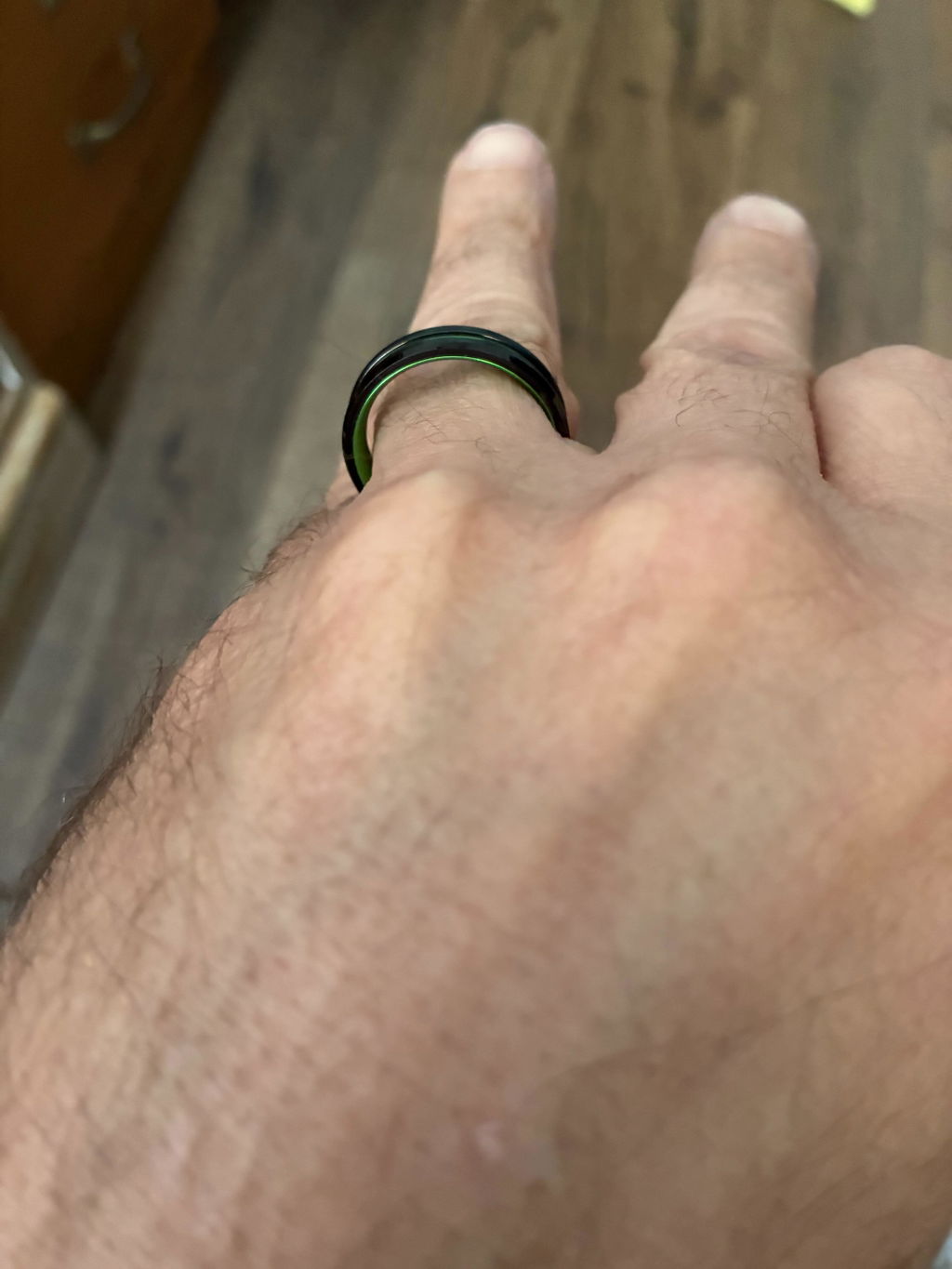
Each of you can pick a metal that suits your skin tone and goes with your other jewelry. For example, one of you might choose a classic gold band while the other prefers modern platinum. See Wedding Ring Colors and What They Mean.
Puzzle rings
Puzzle rings consist of several interlocking bands that form a single ring when assembled. They symbolize unity while keeping each person's distinct personality.
Simple bands with personal details
You might choose a plain band with a small engraved detail that's personal to you, while your partner prefers a unique design etched into the metal. You both show your preferences while keeping a cohesive theme.
Find a compromise
If your tastes are very different, pick rings with a shared design element, like a specific gemstone, inlay or engraving pattern, while each choosing the ring you prefer. You can also pick different widths of the same style.
Matching wedding band sets
Want rings that match? Our sets pair his and hers bands in the same style. For more ideas, see Matching Wedding Bands for Couples.
Shop Ring SetsShop Wedding Bands
Frequently asked questions
How important is it for wedding bands to complement each other?
It's up to you and your partner. There's no right or wrong answer. Some couples choose matching bands to symbolize unity, others prefer unique rings that reflect their individuality. Talk about which option feels right for both of you.
Should wedding bands match the engagement ring?
Again, it comes down to personal preference. There's no rule that they must match. Some people choose bands that match or complement the engagement ring, others opt for a completely different style. Choose a ring that expresses your love and suits your lifestyle.
Is it common for couples to choose different wedding bands?
Yes, quite common. Your band is a symbol of your commitment, and it should make you happy every time you look at it, so explore different styles, designs and metals.
Can the bride and groom's wedding bands be different metals?
Absolutely. There's no rule that they must be the same metal. For instance, the bride might choose white gold or platinum while the groom opts for yellow gold or tungsten. What matters is that you're each happy with your choice.